helping brands with their social media opportunities

(Highlights of) My Work
This is not all of my work, but it is my most involved and recent. I've built strategies, created and managed content and worn almost every hat that a social media director could or would ever do.
I have experience covering food and beverage, government, energy and cannabis to name a few more industries.
Reach out to me and let know how I can help.
case study: editorial + social branding - Cocktails & Movies

Building a brand voice, a content engine, and a community loop - with almost no budget!
CocktailsandMovies.com isn’t a corporate machine with a team and ad spend. It’s a brand built the hard way: voice, consistency, concept, and repetition - the same fundamentals that power any great community channel.
The mission: with movie attendance down post pandemic, create a site and social presence that doesn’t just recommend drinks and movies - it sells the experience: “movie night as an event.”
The Insight
Most entertainment accounts are loud. Most cocktail accounts are generic. The gap is editorial identity.
If you can make people feel like they’re joining a club - with recurring features, a recognizable tone, and dependable weekly drops - you don’t need a massive budget to start building loyalty.
The CocktailsandMovies.com strategy
I built CocktailsandMovies around three pillars:
- A weekly content architecture (so audiences know what to expect)
- A distinctive brand voice (smart, cinematic, slightly dangerous)
- A community loop (prompts + participation, not just posting)
Using the following strategies:
- Created recurring content franchises (consistency beats virality):
- The Monday Morning Hangover Report (box office + commentary)
- The Mid-Week Mocktail (family-friendly, movie-night ready)
- Weekend POURcast (new releases + cocktail pairing)
- DVDeep Cut (curated recs + editorial POV)
- Built a repeatable production workflow for a one-person team:
- content templates
- reusable formats
- platform-optimized copy variations (IG, FB, X, Threads, LinkedIn)
- Framed each post as a mini-story:
- hook with a premise
- deliver a payoff (recommendation, recipe, insight)
- end with a question that invites replies and shares
Results
Outcome: a clear brand identity and content system that scales even when time and resources are limited.
- Established consistent weekly programming across multiple channels
- Strengthened engagement through recognizable series and interactive prompts
- Created a foundation for monetization (sponsors, affiliates, events, partnerships) by proving the brand can publish reliably and build audience habit
Why it worked
Because it treated “content” like programming - not random posts. People don’t follow accounts. They follow shows. This is what modern brand storytelling looks like: a voice people recognize, recurring formats people expect, and a community that feels like it belongs to them.
Case Study: Growing Community - prostate cancer Foundation

How do you bring the whole family into a conversation surrounding a "men's" disease?
When I joined the Prostate Cancer Foundation (PCF), the challenge wasn’t a lack of information - it was a lack of participation. Not only from men, but from men's families.
Education. Make complex health info shareable - without dumbing it down or pandering
Prostate cancer content often fails because it speaks clinically to patients instead of humanly to families. Working alongside the CMO, I built an education approach that translated medical concepts into everyday language, then packaged it into formats people actually share with the people they love. This included easy to read charts, graphics, and other educational material to start conversations for wives, partners, daughters, sons and extended family.
- More shares and saves (content people kept because it was useful)
- More comments that signaled learning (“I didn’t know this,” “sending to my dad,” etc.)
Audience Expansion
A big part of growth came from widening the doorway and bringing families into the conversation. Instead of positioning PCF’s messaging as “for men,” I helped reposition it as “for everyone who supports men.”
- Spouses/partners who often drive health action
- Adult children navigating difficult conversations with parents
- Caregivers looking for reassurance, language, and next steps
What changed
- Content became relatable entry points rather than awareness posters
- Education spread through households, not just followers
Instagram As a Growth Engine With Consistently Scaled Storytelling
Instead of chasing trends, I built a repeatable content system designed around story craft + audience needs.
What I implemented
- A consistent cadence of recurring formats (series-based publishing)
- Posts designed for specific behaviors: save / share / comment / click
- Captions written to move people from emotion → understanding → action
- Editorial planning that kept the feed cohesive while still flexible for timely content
Why it worked
Because each post had a role in the larger narrative: hook the audience, educate them, and give them something to do next.
Private Facebook Community Growth That Changed "Members" Into Participating Leaders
I created and treated the new private communities like living rooms, not bulletin boards. Growth isn’t the win if the room is silent.
Community moves
- Structured weekly programming (prompts, theme threads, Q&A moments)
- Established tone and moderation guidelines to protect trust
- Encouraged peer-to-peer support so the group wasn’t staff-dependent
- Built participation ladders: easy engagement → deeper sharing → sustained belonging
What this created
- Stronger retention and repeat participation
- A community identity people were proud to be part of, not just subscribed to
- A quality team of member-moderators
The Outcomes
The goal wasn’t just reach; it was behavior change: education that actually moved through families and communities that helped people feel less alone and showcased what donations actually accomplished through PCF.
- Increased family-inclusive engagement (partners and adult kids joining the discussion)
- Higher numbers of saves, shares, and meaningful comments
- Community participation increased through structure + trust
- Reduced stigma by making hard topics discussable and human
- IG follower growth (30% over 3 years)
- Engagement rate change (7% v 5%)
- Saves + shares growth
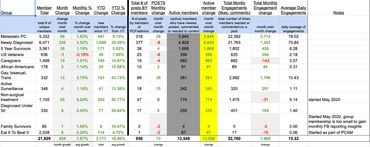
- FB community membership growth (0 → 28+ in less than 5 years)
- Active member participation (8% active)
case study: b2c brand awareness - Lippincott Medicine
The Situation - a leading global publisher/provider of health textbooks, journals, and digital texts
Lippincott Medicine had a classic B2C challenge in a crowded medical education space: students, residents, and clinicians are overwhelmed with information, and even strong brands can blur together if the value proposition isn’t crystal clear.
The goal wasn’t just “engagement.” It was brand clarity, brand preference, and conversion behavior - getting medical learners and clinicians to understand what Lippincott is, why it’s trusted, and where to go next when they needed credible resources.
The insight for B2C content
For a B2C audience, education content has to do two jobs at once:
- Deliver immediate value (something useful right now)
- Build brand memory (so Lippincott is the name they recall later)
If the content teaches but doesn’t connect back to the brand promise, you get likes but not buyers.
So the strategy was to create content that was genuinely useful and consistently reinforced “This is what Lippincott stands for.”
Social Media Campaign Strategies
I structured social content around a simple funnel:
- Awareness: “Here’s the clinical concept / problem”
- Consideration: “Here’s why Lippincott is a trusted source for this”
- Action: “Here’s where to go next” (site, product pages, resources, signups)
All while keeping the tone clinician-smart, student-friendly, and never salesy.
How it all happened
The moves (What I Actually Did)
I developed repeatable social series built for discoverability and habit:
- textbook generated quizzes on Instagram stories to engage followers
- content pullouts directly from texts to showcase expert knowledge
- myth-vs-fact clarity posts
- study-friendly breakdowns that earned saves and shares
- Strengthened brand messaging by consistently tying content back to Lippincott’s authority and clinical credibility
- the “why” behind the resource (what makes it reliable and useful)
- Created conversion-friendly pathways:
- clearer CTAs that matched audience intent (“learn more,” “go deeper,” “save this,” “use this resource”)
- content designed to drive qualified clicks instead of empty engagement
- Maintained message discipline so the brand voice stayed consistent across topics and formats
The results
Stronger awareness, clearer brand positioning, and more intent-driven traffic.
- Increased brand recognition by consistently linking usefulness to the Lippincott name
- Improved consideration by clarifying what the brand offers and why it matters
- Supported conversion goals by driving more qualified audiences to the next step (resources, product pages, deeper learning)
Why did it work?
Because it treated social as a brand-building channel, not just a content channel. The content delivered value immediately, but it also trained the audience to associate that value with one name: Lippincott.
The takeaway was B2C growth isn’t about posting more. It’s about building familiarity and preference — so when students and clinicians need trusted medical resources, they don’t just search… they choose you.
images of campaign images